Books by Ian Rogers




Books by Ian Rogers
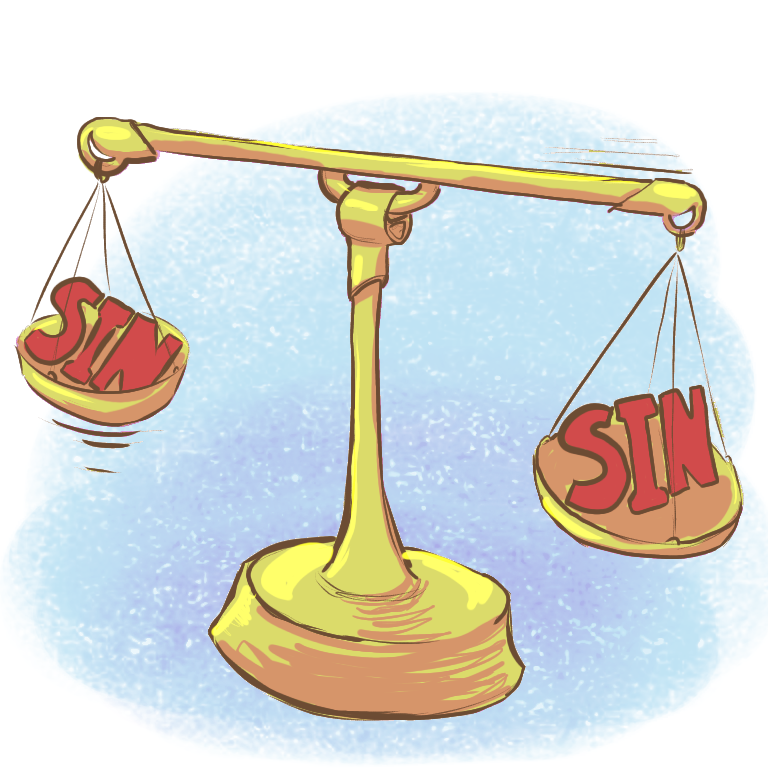
People can be very pedantic about sin. ‛All sin is unacceptable to God, who is totally pure,’ they say. Yes - true. All have sinned and fall short of the glory of God. Therefore all need to be redeemed - our sins covered over or wiped away before we are ready to enter heaven where we will be totally pure in a totally pure place with a totally pure God. However, although sin is sin, just as all stars are stars, not all sins are equal, just as all stars are not the same.
In St John’s first letter he writes: ‛Not all sins lead to death… there are those that do lead to death’ (1 Jn 5 v 16-17). Perhaps he was thinking of Leviticus? where some sins lead to being stoned to death while others require restitution to an offended person (e.g. stolen goods plus 20%) and a guilt sacrifice to God.
Jesus said: “No sin is unforgivable except the sin against the Holy Spirit”. This was in the context of the Pharisees saying that Jesus was inhabited by a demon - when he was actually full of the Holy Spirit. They said Jesus drove out demons by the power of Baal-ze-bub; that is, by the power the top demon. The name Baal-ze-bub means ‛Lord of demons’. Jesus was exercising power from the third member of the Godhead. To call ‛God- the Holy Spirit’ the ‛King of the Demons’ is quite an inversion of the truth!
Here are some example from the Bible where various sins were treated in different ways.
Jesus said: ‛You will be judged by every (casual) word you speak. If you call your brother rakka (fool) you are in danger of hell.’ I’ve often called bad drivers ‛road hogs’ and worse, yet I have sometimes been distracted, mistaken, or foolish myself. I need to take the plank out of my own eye!
It might be thought, from the last point, that God and Jesus send physical punishment for sin - a disease, for example. People who are ill a lot often ask: ‛Why is God punishing me? What have I done to deserve this?’ Jesus was clear that God does not send sickness to punish sin. When the disciples asked: ‛Whose sin made this man blind? His own or his parents?’ Jesus told them it was neither i.e. his illness was not a punishment from God. It was to show the glory of God - an odd thought to us today. I think Jesus meant that the blindness was one of those random nastinesses that happen because we live in a fallen world - ‛blind chance’ might be a sad but appropriate term. The silver lining was that it presented Jesus with an opportunity like all other illnesses he encountered) to demonstrate God’s glory by performing a healing
To the paralysed man lowered through a roof to set him before Jesus, he said: “Your sins are forgiven” before he said : “Get up and walk”. Does this mean the man’s sins caused his illness? Well, there are psychosomatic illnesses - physical illnesses caused by mental issues - and the man may have had one of these. Remember, in that time some people (not all) took sin very seriously. Perhaps, having sinned as we all do, he just could not forgive himself. We might call this a guilt complex. Jesus authoritative forgiveness could have released him from a mental problem. However, Jesus may just have been showing all present, including the Pharisees, that spiritual wholeness is a priority before physical healing and that he, Jesus, had authority to give both.
Paul lists various grades of sin James too? “Be holy as I am holy” is only possible through trust in Jesus. Attempting perfect confession leads to introspection and pharisaism.
All known sins has to be confessed. If we have a besetting sin- like unreasonable, repeated anger- we have to repent of the tendency, the whole character trait, not just repeatedly repent of each occasion (although this is better than nothing). Watching for patterns in our behaviour is one of the keys to self knowledge. Confession and prayer can become requests for help, that we should be changed for the better by the God who indwells us . We are not good at changing ourselves because “no one knows the deceit of the heart”. We are masters of excuses and self deception but God-the-Holy-Spirit knows all things. He lives within a Christian and helps us to ‛continually put off the old man and put on the new’. Opening ourselves to the Holy Spirit allows him to bring things to our attention, to correct us spiritually in the short term and to help us grow more like Christ in the long term.
P.S Forgive all of my sins and iniquity ( unrealised/unacknowledged sin). We don’t need to be and shouldn’t get paranoid and endlessly dig into our consciences. We needn’t be too down on ourselves - God forgives freely and totally. Jesus said: ’My burden is light and my yoke is easy.’ Post-forgiveness guilt is form of pride. “I really let myself down… I am so good/ knowledgeable/careful that I should never have done that”.
<< Next Archive Previous >>