Books by Ian Rogers
Books by Ian Rogers
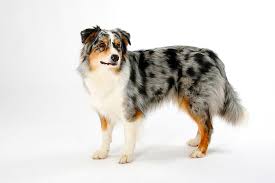
My first dog was a gift on my 11th birthday. He was a small, tricolour, Welsh border collie - technically a ‘blue merle’ and I loved him. We lived on the Welsh borders and my parents - rather insensitively, I thought - called him Taff. This nickname for anyone Welsh has unfortunate undertones due to a children’s rhyme dating from 1780.
Taffy was a Welshman, Taffy was a thief,
Taffy came to my house and stole a piece of beef.
I went to Taffy’s house, Taffy wasn’t home;
Taffy came to my house and stole a marrow bone.
Later versions extend the theme of Taffy stealing things and the writer getting his or her own back.
I knew, even aged 11, that Timmy and Loony from Enid Blyton books were caricatures and that dogs, however well trained, retain their instincts and are never truly human. The right (or wrong) stimulus can transform a placid pet into a slavering monster. Dogs are also opportunists and will go selectively deaf if there’s a powerful distraction. Labradors are among the most reliable dogs, which is why they make excellent guide and helper dogs - though even they need their down time and can get up to mischief. Collies and terriers tend to think for themselves and are great at problem solving - that is, thinking things through for themselves.
Taff lived up to his name when he was about two. Family friends visited and brought a pound of sliced ham. Mum put it in the centre of the kitchen table, confident the little dog couldn’t reach it. He did! And to crown the offence, after scoffing the lot he was copiously sick all over the floor. Another day he made us laugh when Mum put a bowl of potato peelings on the floor. He went straight to it, plunged his face under water and came up with a dripping head and a walrus moustache of peelings! He ate them happily and it became a standard game.
Taff was a great dog, well trained, responsive and playful, but he had some incurable bad habits. He would escape from our large garden and go walk-about. I would look down the hill and see him half a mile off and getting further away every second. I’d have to run like mad to catch up with him and bring him home. Selective deafness had set in.
Our home’s long garden ran parallel to the road. Our ground level was about five foot above the road, retained by a stone wall, and from our side, a two foot high parapet. This was capped with alternate large and small stones forming crenulations. Whenever an unfortunate pedestrian went past, Taff would hurl himself into one of these gaps, snarling, barking and lunging as if he was about to leap out. Many a passer by nearly jumped off the pavement into the road. As they walked the length of the wall, Taff would dart from one crenellation to the next, seemingly completely rabid, until one of the family rushed out and dragged him away. I overheard a boy from the local secondary (11 - 18) school telling his mates that he was going to kill that dog. We should, of course, have put up a fence.
My father supported a scheme to give foreign boys a taste of English life. It wasn’t an exchange scheme, they paid to live with English families, attended an English schools and went on a variety of outings. Once we had three Egyptians to stay, aged about 11, 13 and 16. I forget their names so I will call them Amar, Kamin and Shehab. My brother Andrew and I were 11 and 13 at the time. The boys were fanatical supporters of President Gamal Abdul Nasser Hussein and were thoroughly indoctrinated about how Egypt had defeated first Israel (Egypt lost) and then the U.K. (we lost!) To show their superiority the younger lads would walk up to us, flick their fingers in our faces and sneer at us. One day my brother had had enough and rugby tackled Kamin. They rolled about on the ground, wrestling but not landing any punches. Taff, who was making one of his periodic breaks for freedom, looked to see what commotion was about and came hurtling back, smartly nipping Kamin on the bum. You never saw a boy jump up faster!
Sadly Taff didn’t only nip our enemies. From an early age he would fly in to savage, defensive rages over food. I remember my mother throwing a plate at the wall just above him. It didn’t hit him - she didn’t mean it to - but the smash did snap him out of his rage. We hoped our love and care would win his trust (and it did 99% of the time) but his fits of rage got gradually worse. After 3 years, and with no food present, he suddenly flipped, attacking and biting my mother. Sadly, he had to be put down.
In retrospect, we guessed he and his litter had not been well fed. He probably had to fight his siblings for food and to defend the share he won. The free-diving for potato peelings was one clue and the ultra-aggression at the garden boundary was another. Ironically, he was one of only two dogs that we paid for. The others six were rescue dogs. Love and patience helped them to overcome their problems but neither of the bought ’un dogs did so and both came to premature ends.
The next dog story will be about Judy, who gave us a few problems but lived a happy and vigorous life to a considerable age.
<< Next Archive Previous >>